


Creating a better differential viscometer

Used as a GPC/SEC detector to determine the specific viscosity of a polymer or protein in solution - differential viscometers have been around for decades and have demonstrated their value in numerous applications. The R&D team at TESTA Analytical has improved the original 4-capillary bridge design and created a new generation differential viscometer with exceptional performance and operational advantages.
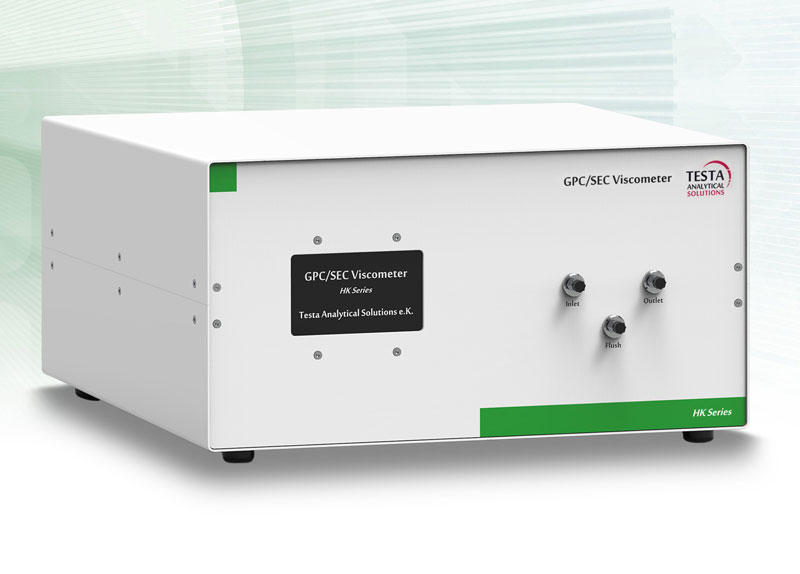
Well documented shortfalls of the original design have been addressed in the new TESTA Analytical differential viscometer. This includes elimination of ‘sample breakthrough’ and the negative peak that arises after each run, allowing for faster sequencing of GPC/SEC sample injections, reduced solvent use and considerable analytical time savings.
Also, the sensitivity of the differential viscometer has been considerably improved by reducing the travel time within the bridge thereby reducing peak broadening and loss or signal during sample transit.
Additionally, the new TESTA Analytical differential viscometer incorporates pressure transducers manufactured from a Hastelloy alloy, assuring 100% compatibility with even the most aggressive solvents used in GPC/SEC. This innovation coupled with their low dead volume and market-leading sensitivity and resolution, enable these pressure transducers to help produce perfectly defined peaks even at lowest concentrations of polymers and proteins in solution.
Thank You!

Your message has been forwarded to our team and we will reply as soon as possible. Thank you for your patience.
© 2026 TESTA Analytical Solutions e.K. All rights reserved.