


Flow technique provides precise control over LNP formulation production
Hizkia Chandra and Carlo Dessy, Testa Analytical
Published in International Labmate – November 2025

Lipid nanoparticles (LNPs) are a type of drug delivery system that uses lipids to encapsulate and transport therapeutic agents, including drugs and genetic material, to targeted cells or tissues. They are increasingly recognised for their potential in overcoming challenges associated with conventional drug delivery, such as poor solubility, instability, and limited bioavailability.
As the use of LNPs has risen significantly in recent years this has brought with it a demand for precise control over formulation parameters. Among these, the flow rate ratio (FRR) and the total now rate (TFR) are particularly critical, as they have been shown to significantly influence the physicochemical characteristics of the resulting particles,including size, polydispersity, and encapsulation efficiency [1]. This direct correlation between particle size and flow rate calls for accurate flow control systems to ensure uniform products and reproducible production methods, this is especially crucial in biotechnology and pharmaceutical production companies governed by strict regulatory requirements.
Conventional flow measurement technologies however exhibit several operational limitations in real-world applications. For example, Coriolis flowmeters often suffer from slow data accumulation rates, while volumetric flowmeters cannot be installed in-line, which is a key requirement in LNP production processes. Using the above stated flow measurement technologies risks giving incorrect flow readings, leading to batch-to-batch discrepancies.
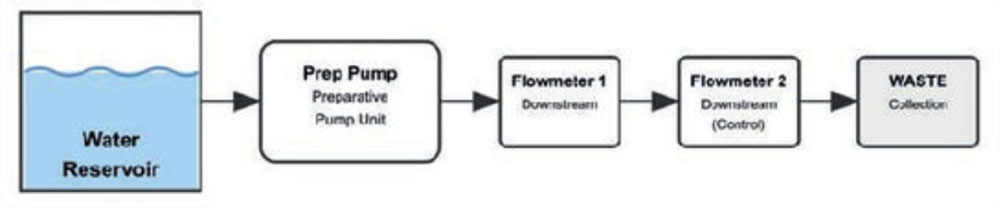
Methods for LNP production flow monitoring conventionally use flowmeters downstream of the pump (see Figure 1), usually one flowmeter per used pump. What seems to be logical, has however several drawbacks. First, by increasing the number of required connections on the high-pressure side of a system, this increases the possibility of undesired leakages which might go undetected. Also, this setup requires use of higher priced flowmeters capable of withstanding high pressures while keeping a constant performance. Lastly, operating at higher pressure increases the chances of flowmeter failure.
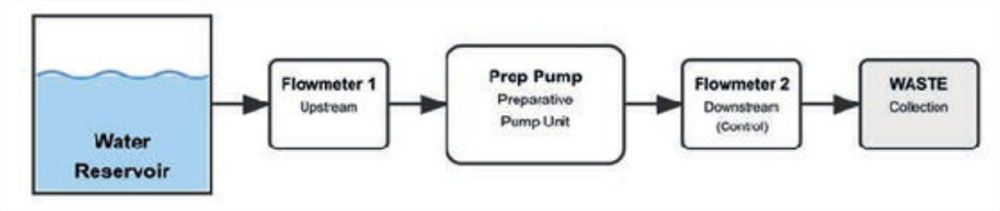
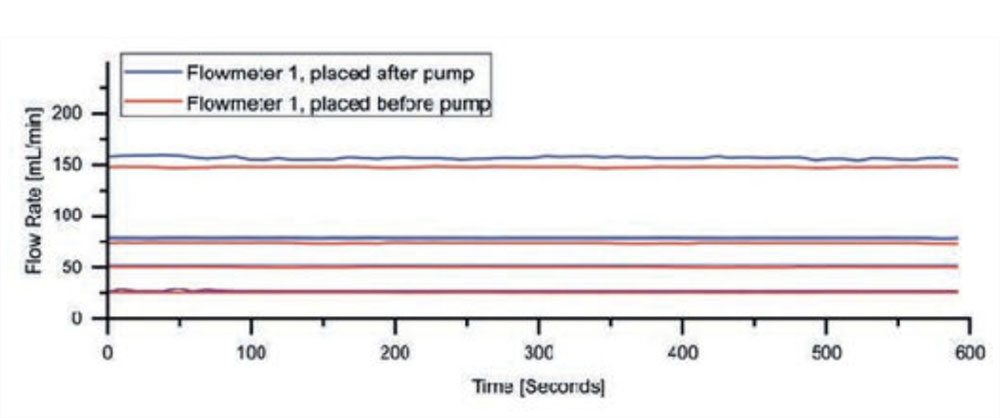
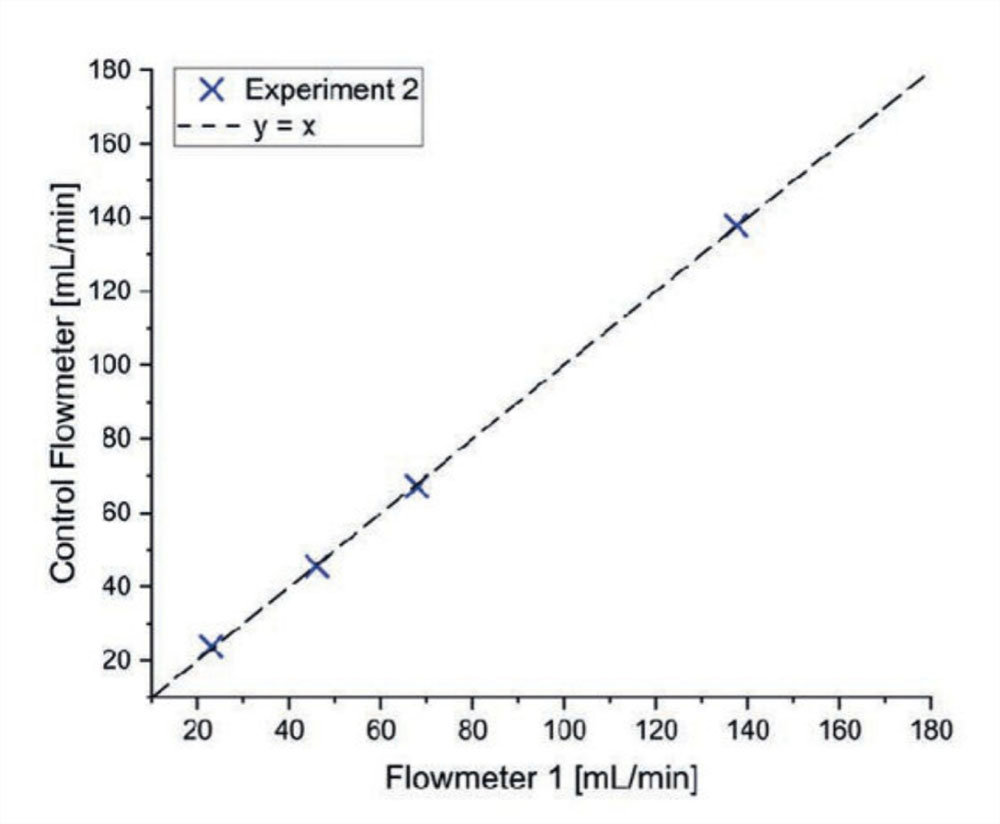
Comparing both flowmeters reveals that flow measurements at the pump inlet are virtually identical to flow measurements taken at the conventional high-pressure side. Overall, the maximum deviation observed was less than 3% at the lowest flowrate, indicating that a preparative flowmeter with a lower flow range of up to 40mL/min might be a precise, lower cost alternative for monitoring LNP formulation production.
This study confirms that positioning a Testa Analytical preparative flowmeter upstream delivers identical data compared to conventional high-pressure setups, while eliminating the complications that come with high-pressure environments. An additional benefit of this real time monitoring setup is its ability to detect micro air bubbles and pause the system before they reach the pump and the system. This unique capability can eliminate system downtime and the expense of product rejections that arise from unexpected air bubbles.
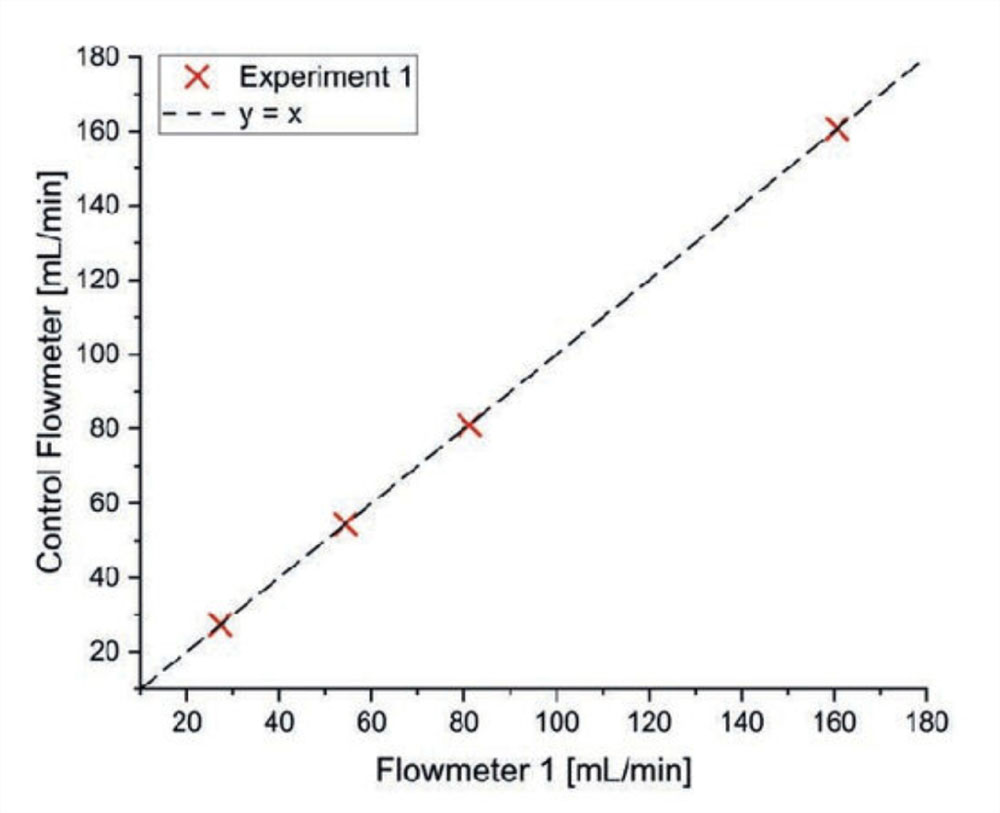
In this study, the Testa Analytical preparative thermal flowmeter demonstrated its suitability for LNP production monitoring applications. Its non-invasive inline installation capability provides real-time measurement without disrupting now patterns, while its broad solvent compatibility addresses the diverse buffer and solvent requirements in LNP production. Additionally, the dedicated flowmeter software which is compatible with many Chromatography Data Systems (CDS) ensures reliable data collection and traceability. Overall, the implementation of this system enhances LNP formulation production reliability and regulatory compliance. which altogether results in reduced operational costs.
Conclusion
This study demonstrates that Testa Analytical preparative thermal flowmeters provide superior measurement capabilities compared to traditional high-pressure monitoring approaches. The flow measurement approach presented minimises the possibility of costly process revalidation while achieving reproducible, scalable, and audit-ready LNP production. This methodology addresses fundamental challenges in process parameter control, system reliability, and regulatory compliance.
References
1.Roces CB, Lou G, Jain N, Abraham S, Thomas A, Halbert GW, Petrie Y. Manufacturing Considerations for the Development of Lipid Nanopartides Using Microfluidics. Pharmaceutics 2020 Nov 15;12(11):1095.
The Authors:
Hizkia Chandra is a product specialist and Carlo Dessy the Managing Director of Testa Analytical. They may be contacted via https://www.testa-analytical.com/contact.html or +49-30-864-24076.
Thank You!

Your message has been forwarded to our team and we will reply as soon as possible. Thank you for your patience.
© 2026 TESTA Analytical Solutions e.K. All rights reserved.